- Text
- Markdown, plain text and other UTF-8 text files, or pasted text
- PDF
- Up to 100 MB, converted on your computer with pdftotextOptional Marker OCR for scans and complex layouts.
- Images
- PNG, JPEG, GIF, WebP, HEIC, TIFF, BMP
- Web pages
- Any http or https link, read straight from the site or through Firecrawl if you connect itIf neither works, the note keeps the link and title.
- Other files
- Word, Excel and similar files are kept as they are, with no text extracted
- Agents
- Claude Code and Codex in the terminal: testedThe Claude Code desktop app, ChatGPT Work and Hermes use the same instruction files and aren’t tested yet. Pi gets its own rules and a read-only fresh-session check; a full vault run isn’t tested yet.
- Editors
- Obsidian, with optional Dataview views, or any Markdown editor
- Two Macs
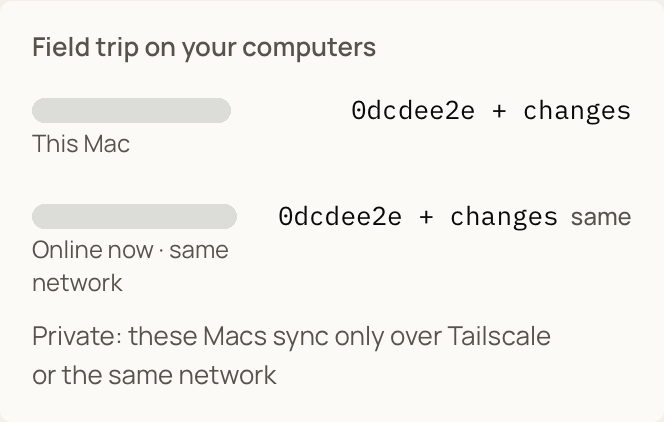
- One workroom kept in step between two Macs with Syncthing, which Workroom Drop includesObsidian Sync and iCloud Drive aren’t supported or tested yet.
- Web research
- Firecrawl, Tavily and Browserbase, connected to your agent
- Deep research
- OpenAI, Gemini and ParallelNot yet verified against the live services.
- Other agents
- Read-only access to the vault through MCP
- Publishing
- Static HTML or an Astro project, synced with the Vercel, Netlify, Cloudflare or GitHub command-line toolsSyncing isn’t yet verified against these hosts.
- You need
- Python 3.9+ and Node.js 18+ on Mac, Windows or Linux, tested on macOS so farWorkroom Drop needs macOS 11 or later on Apple silicon. Git is optional.
 Workroom Drop