Ledger — Millbrook library hours
- type
- map
Question: will the library keep its current opening hours through the 2026 budget? Scope: one fictional town, one operating budget, the first quarter of actuals. All figures, documents and people are invented.
The thesis now
The gap is smaller and more specific than the budget debate implies. Energy is the only line clearly off plan: about £9,200 a year above budget on the Q1 run-rate. Visits are soft by roughly 11%, which drags fines and room hire a little, but staffing is underspent because two posts started late and the grant is fully recognized and restricted. Cutting Saturday hours would attack the visits line, not the energy line. Re-tender energy and fill the outreach posts first; keep the hours decision deferred until the Q2 report separates timing from run-rate.
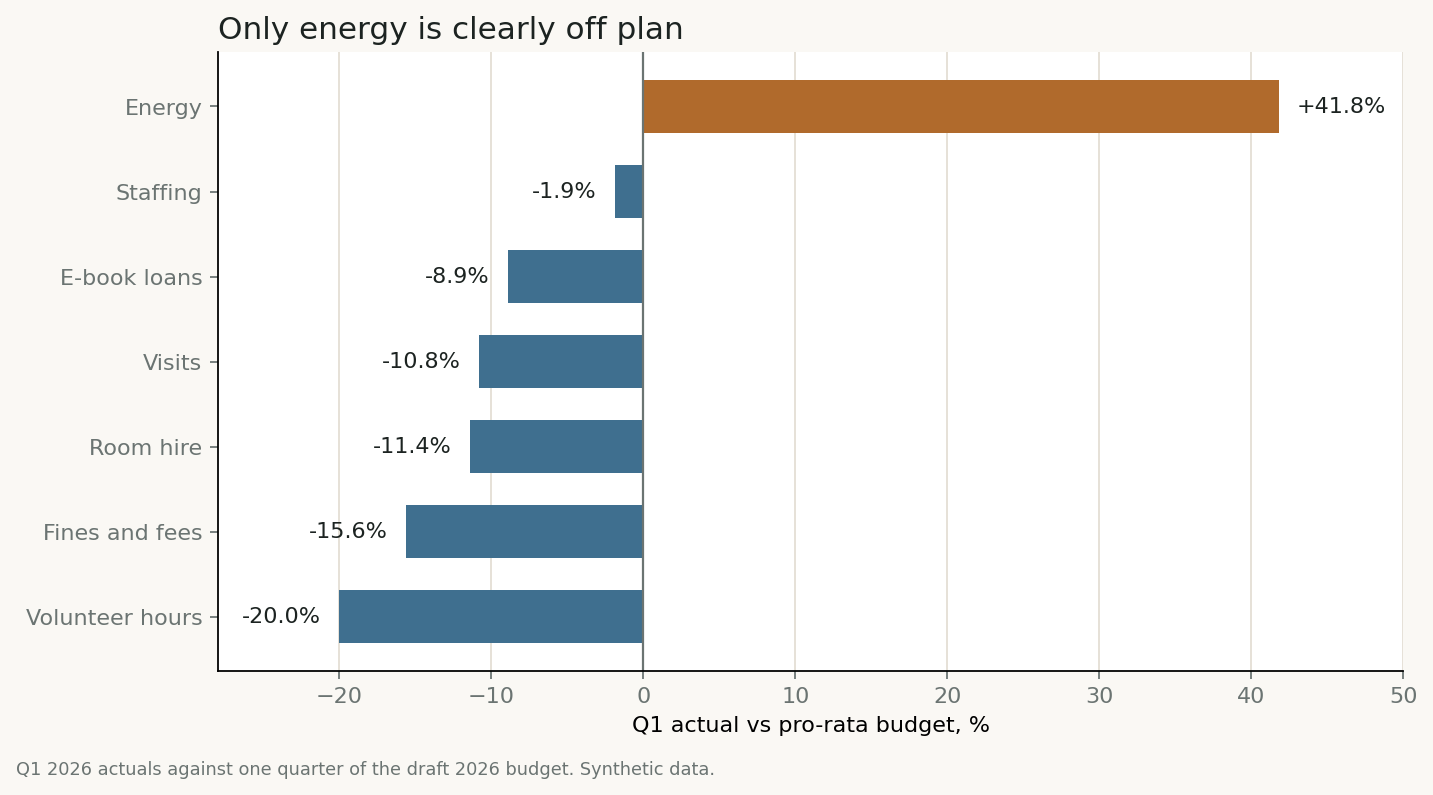
Q1 actuals against a pro-rata share of the 2026 budget. The chart shows variance, not the size of each line.
Expectations and evidence
- Visits in 2026 — 96,000 budgeted. Q1: 21,400 against 24,000 pro-rata, about 11% soft. Not yet a crisis; it is the line a hours cut would make worse.
- Staffing cost — £412,000 budgeted. Q1: £101,000 against £103,000 pro-rata. Lower because posts started late, not because the service is lean.
- Energy cost — £22,000 budgeted. Q1: £7,800 against £5,500 pro-rata; annualised about £31,200. This is the real gap.
- Grant income — £75,000. Fully recognized in Q1, and restricted to outreach and digital access. It cannot cover energy.
- Fines and fees — £9,000 budgeted. Q1: £1,900 against £2,250 pro-rata. Small, and the report does not split fines from printing.
- Room hire — £14,000 budgeted. Q1: £3,100 against £3,500; two hirers did not renew.
- Volunteer hours — 1,200 budgeted. Q1: 240 against 300 pro-rata. The draft assumed volunteers would replace 0.6 of a post; the run-rate is 0.48.
- E-book loans — 6,500 budgeted. Q1: 1,480 against 1,625. Weaker, not absent.
Decisions
| Decision | What happened |
|---|---|
| Accept the community fund grant | Accepted 18 March 2026; posts to be recruited |
| Defer the Saturday-hours cut | Deferred to Q2, with no savings target |
| Reject Wednesday closure | Rejected outright; kept as evidence of the committee's limits |
The decisions are attributed to the fictional library committee and its minutes. They are not a recommendation.
Proposals still live
- Cut Saturday hours to save staffing — £26,000 claimed, assumptions untested.
- Re-tender the energy contract before cutting hours — cheapest to investigate, no saving estimate yet.
- Close on Wednesdays — already rejected; preserved for the record.
- Fill the two outreach posts — grant already recognized; recruitment is the risk.
What would change the thesis
- Monthly energy data showing Q1 was a cold-quarter spike rather than a new run-rate.
- A Q2 report where visits recover without outreach, which would weaken the case for the posts.
- A rota-level costing showing the Saturday cut saves close to £26,000 without redundancy.
Open questions
- Is the year-end gap real or a timing effect?
- Would cutting Saturday hours actually save £26,000?
- Can the energy line be fixed without touching visits?
About this demo: Millbrook, its library, committee, staff and funder are fictional. Every figure and document is invented for the demo; the ledger shows the method, not a real budget.